Water safety isn't just a location —
it's behavior + context.
A water safety certification built specifically for behavior analysts.
A standalone credential in behavior-analytic water safety education — no swim certification required. Earn the BRIDGE-WSC (BRIDGE Water Safety Certification).
Founding members will be first to know what's next — including preferred access and pricing as the program grows.
Sources: Guan & Li, 2017; Cosart et al., 2025; Denny et al., 2021.
Water Safety Is Already in Your Caseload
Some behavior analysts have lost a client, a friend, or a family member to drowning and carry that with them. Others carry their own fear or trauma around water. Many BCBAs have had parents ask about water safety and didn't know where to start — or weren't sure if it was even in their scope. Others have addressed elopement or water safety to the best of their knowledge but feel limited or unsure. BCBAs have also expressed a desire to add water safety as a specialty to leverage their role or start a new professional journey. And for those who already have a background in aquatics, this is a chance to formalize that connection and expand their involvement professionally.
The BRIDGE to Safety Certification
BRIDGE gives behavior analysts the tools to move from uncertainty to action — assessing risk, guiding environmental and behavioral changes, and leading families toward real water safety, all within your existing scope of practice. Instead of replying to parent concerns with "enroll in swim lessons" or "it's outside my scope," you'll be equipped to confidently plan safety with parents, using a framework you can apply to any client.
The BRIDGE framework covers six core domains of water safety practice for behavior analysts:
- B—Behavior
- R—Recognize Risk
- I—Instruction
- D—Design Environment
- G—Generalize Skills
- E—Enjoyment and Motivation
No Pool Required
Water safety lives in your clients' bathrooms, sensory tables, kitchens, and community transitions. You're already in the room where it matters.
Built on Behavioral Analytic Principles
Every core domain is grounded in the clinical tools you already use — assessment, antecedent modification, and parent training — applied to water safety.
Parent Training Focus
A framework that includes simple, attainable, and applicable steps to train your clients' parents and caregivers.
Earn the BRIDGE-WSC Credential
Complete all six core domains and earn the BRIDGE-WSC — a water safety specialty credential specific to behavior analysts.
How the Founding Cohort Works
- Access: Immediate access to your portal — move through all 6 core domains in order, at your own pace, with access to every module and resource for a full year
- Bonus: The BRIDGE Bonus Group — live Q&A and case support meetups, twice a month, free for 6 months. Come as you are, no modules need to be completed to join
- Enrollment: Founding Cohort enrollment closes October 31st
Everything You Need.
What Becomes Possible
The BRIDGE to Safety Certification will give you the tools to apply water safety to your caseloads across different skillsets and environments.
Respond to a parent's water safety questions with clinical confidence rather than uncertainty or avoidance
Identify water-related behaviors in your current caseload using a behavioral lens you already understand
Begin water safety conversations with families using language and tools grounded in behavior analysis
Recognize how elopement, environmental access, and daily routines connect to water safety risk across settings
Add water safety awareness to your existing practice — in the home, clinic, school, and community
Support families who have nowhere else to turn with a framework built specifically for the population you serve
No pool required. No swim certification needed.
Who the BRIDGE to Safety Certification Is Built For
✓ This IS for you if...
- A parent has asked you about water safety and you didn't know where to start
- You know water safety matters for your clients but don't know where to start or how to stay within your scope
- You have addressed elopement or water safety to the best of your knowledge but feel limited or unsure
- You want to add water safety as a meaningful specialty — to leverage your role or start a new professional journey
- You already have a background in aquatics and want to formalize that connection within your behavioral practice
- You work in home, clinic, school, or community settings with autistic individuals and their families
— This is NOT for you if...
- You're looking for a swim lesson curriculum
- You don't see water safety as part of what behavior analysts do
- You're not open to expanding how you think about safety within your existing practice
- You're expecting a quick fix — this is a framework that takes time to learn and apply
- You want a one-time training rather than an ongoing framework
Not sure yet? Start with Beyond the Pool — a free guide for behavior analysts that shows you exactly where water safety already lives in your everyday practice.
Get the Free GuideBuilt by the BCBA Behind the Framework
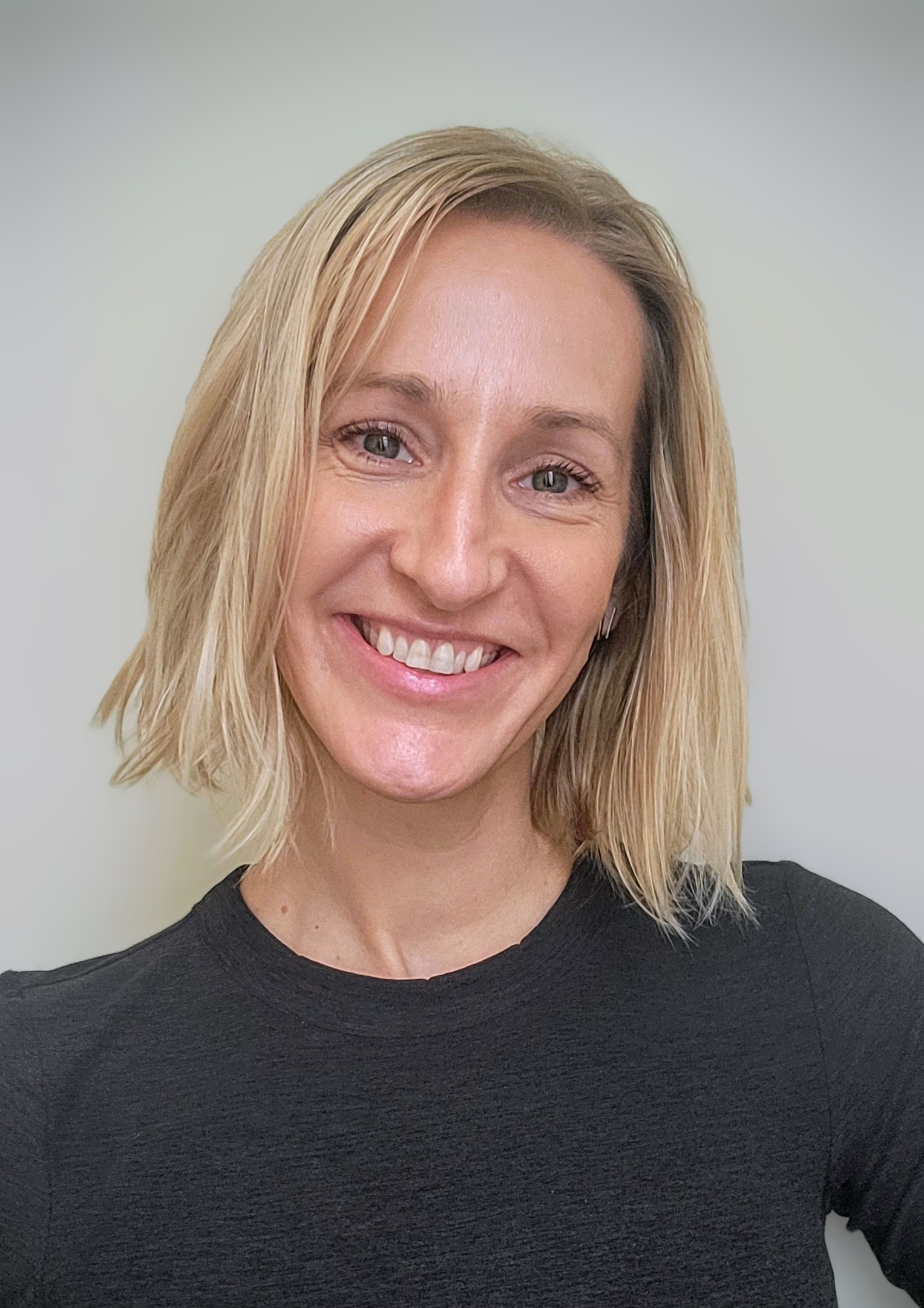
A BCBA, adaptive swim instructor and Co-Founder of Blended Aquatics who loves to nerd out about water safety. My goal is to build a community of behavior analysts who are equipped, confident, and connected around water safety.
Here's something that still surprises people: water safety was not always taught — even as part of swim lessons. The same people teaching swimming weren't necessarily teaching water safety. Odd. And genuinely problematic.
Since 2012 I've worked directly with autistic children and their families in both aquatic settings and in-home ABA. Over time I kept hearing the same concerns from families regarding water safety. I kept looking for answers, better frameworks, better tools, and better ways to connect behavior analysis to the concerns around water.
That search became the BRIDGE to Safety Framework™. Built to bridge the gap. Built to show behavior analysts where water safety already lives in their practice — and how they're already part of the solution.
MA, BCBA, LBA-MN
Co-Founder, Blended Aquatics
The BRIDGE to Safety Certification
This is the Founding Cohort — paving the way for behavior analysts to go from awareness to action in water safety.
Founding members will be first to know what's next — including preferred access and pricing as the program grows.
Enroll now for immediate portal access — move through all 6 core domains in order, at your own pace, with a full year to complete them. Founding Cohort enrollment closes October 31st.
BRIDGE to Safety: Water Safety Certification
for Behavior Analysts
- Immediate portal access — move through all 6 core domains in order, at your own pace, with a full year to complete them
- Module resources — assessments, planning tools, and reference guides
- Environmental assessment tools — home, clinic, school, and community settings
- Build a Water Safety Action Plan — learn to assess behavior, identify modifications, and coach parents through applying water safety in their own home and community
- Bonus: BRIDGE Bonus Group — 6 months of free live Q&A and case support meetups, twice a month
- BRIDGE-WSC Credential — awarded upon completion of all six core domains and a final knowledge assessment. Valid for one year, with ongoing access to new research and materials as they're added.
Get the Free Guide — Beyond the Pool
Common Questions
Do I need to be a swim instructor or know how to swim?
No. The BRIDGE to Safety Certification is built on behavioral analytic principles you already know. No pool, no swim certification, and no swimming ability required.
I work in a clinic, not a home. Does this apply to me?
Yes. Water safety risk exists in clinics, schools, and community settings — not just homes. The framework applies across every setting you work in.
When can I start?
Right away. You'll get immediate access to your portal and can begin the first core domain as soon as you enroll — moving through the rest in order, at your own pace, with access to everything for a full year.
Are CEUs available for this certification?
No. The BRIDGE to Safety Certification is a specialty credential in its own right — built around clinical application specific to behavior analysts, not contact hours.
How do I earn the BRIDGE Water Safety Certification credential?
Complete all six core domains and pass a final knowledge assessment.
How long is my credential valid?
Your BRIDGE-WSC credential is valid for one year, with ongoing access to new research and materials as they're added.
What does annual renewal look like?
Renewal details are still being finalized. What we can tell you: this founding curriculum is foundational — a complete, usable framework on its own. Future renewals will build on that foundation, expanding into new dimensions of water safety, such as equity and inclusion or drowning risk in other underserved populations. Founding members will be first to know what's next — including preferred access and pricing.
Is the BRIDGE-WSC credential externally accredited?
The BRIDGE-WSC is a specialty credential developed by Blended Aquatics — the first credential of its kind built specifically for behavior analysts working in water safety. It is not a CEU or ACE-approved credential.
Is this within my scope of practice as a BCBA?
Behavior analysts are not being asked to teach swimming or provide aquatic therapy. The BRIDGE to Safety Certification focuses on what BCBAs already do — behavioral assessment, environmental modification, caregiver training, and safety skill instruction.
What's included in the Founding Cohort besides the certification?
Founding Cohort members also get the BRIDGE Bonus Group — 6 months of free live Q&A and case support meetups, twice a month, open to everyone regardless of where you are in the modules.
What is your refund policy?
Because you receive immediate access to your portal and course materials upon enrollment, we don't offer refunds. If you have questions before enrolling, we're happy to help you decide if this is the right fit — email us at [email protected]
More questions?
Email us at [email protected]
The BRIDGE to Safety Framework was built for behavior analysts who already care — you just didn't have the clinical structure to act on it. Now you do.
This is the Founding Cohort — paving the way for behavior analysts to go from awareness to action in water safety. Founding member status and this pricing are exclusive to this cohort.
Founding Cohort enrollment closes October 31st.
Claim My Founding Member Spot — $347No pool required. No swim certification needed.
Cosart, B. D., Lawson, K. A., Williams, S. R., Lewis, K. E., Namutebi, R., & Johnson, M. B. (2025). Parent perspectives on water safety for children with autism. Journal of Autism and Developmental Disorders. https://doi.org/10.1007/s10803-025-06819-7
Denny, S. A., Quan, L., Gilchrist, J., McCallin, T., Shenoi, R., Yusuf, S., Weiss, J., Hoffman, B., & Council on Injury, Violence, and Poison Prevention. (2021). Prevention of drowning. Pediatrics, 148(2). https://doi.org/10.1542/peds.2021-052227
Guan, J., & Li, G. (2017). Injury mortality in individuals with autism. American Journal of Public Health, 107(5), 791–793. https://doi.org/10.2105/AJPH.2017.303696